Fruit and berry fillings are mixtures made from fresh or frozen berries and fruits and can have different structures depending on the production technology. In this article, we’ll look at the differences between different structures, the advantages of each, and what kind of filler confectioners and bakers should choose to get the expected result.
What is the difference between homogeneous and heterogeneous fillers for confectionery?
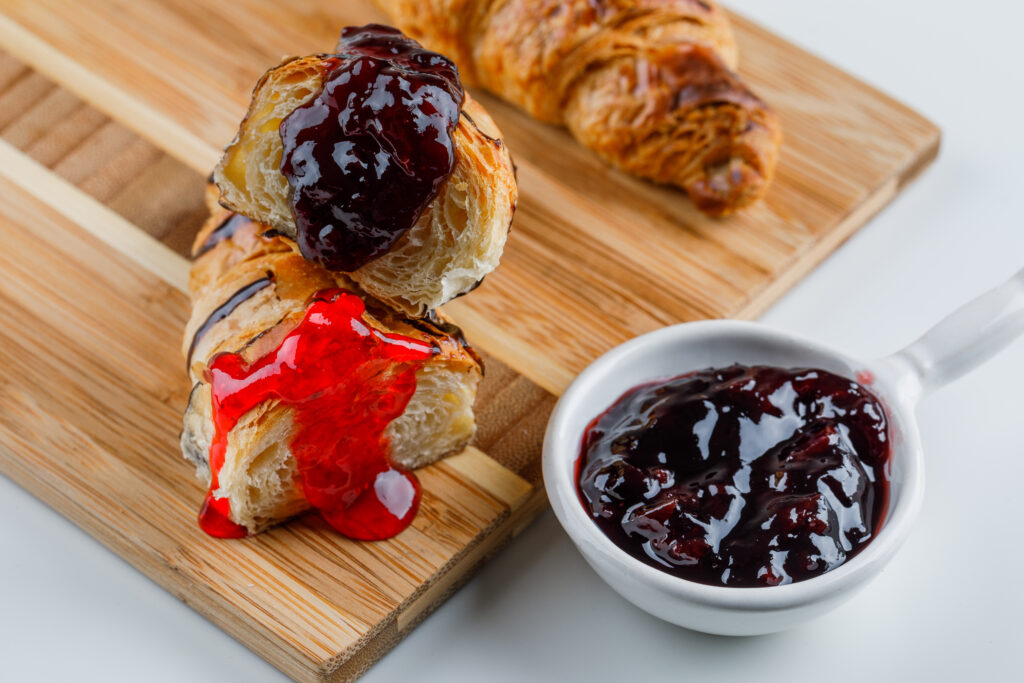
Homogeneous fillers have a homogeneous texture, meaning that the particle size of the individual components is very small, and the finished product is quite thick and plastic.
Homogeneous fillers consist of fruit and berry puree, sugar and pectin. All ingredients are placed in special containers – pasteurizers – where they are mixed at low pressure and low temperatures to preserve nutrients, natural color and taste.
Advantages of homogeneous fillers:
- They do not caramelize or flake.
- Easy to dose and evenly distributed in the dough.
- All parts of the finished product have the same flavor, delicate and uniform texture.
The disadvantage of homogeneous fillings is the lack of textural variety, which is necessary for open pies and directly affects the taste and attractiveness of the finished product.
Heterogeneous fillersunlike homogeneous fillings, consist of components of different sizes, so the structure of the filling is heterogeneous. Thanks to these fillings, areas with different textures are formed in the baked goods: pieces of fruit, nuts, chocolate, or spices can be found here and there. The percentage of pieces can vary from 40-80% depending on the filling.
Advantages of heterogeneous fillers:
- They add extra textural variety to baked goods.
- They make finished products more attractive due to the difference in colors and structures.
- They create unexpected flavors in every bite.
The disadvantage of heterogeneous fillers is associated with a complex structure: individual pieces can settle or be less well distributed in the dough.
What filling should bakers and confectioners choose
Both types of fillings are widely used in the production of confectionery and bakery products, as fruit and berry fillings not only diversify the taste, but also make products healthier, stand out from the crowd and increase their appeal to consumers.
The choice between homogeneous and heterogeneous fillers depends on the texture and flavor effects you want to achieve in the finished product.
A homogeneous filling will give the finished product a uniform texture and flavor. For example, a pear jam pie from TM Delicia will have a soft filling that is evenly distributed in the dough. Each slice of the finished pie will have the same structure and “even” taste.
On the contrary, heat-stable jam with pieces of fruit in Apple Strudel will make the taste more complex: some pieces of the pie will have more pieces of flesh, while others will have less.
Thus, the right choice of filler affects the taste and texture of the flour product, as well as the overall consumer evaluation of the final product.